






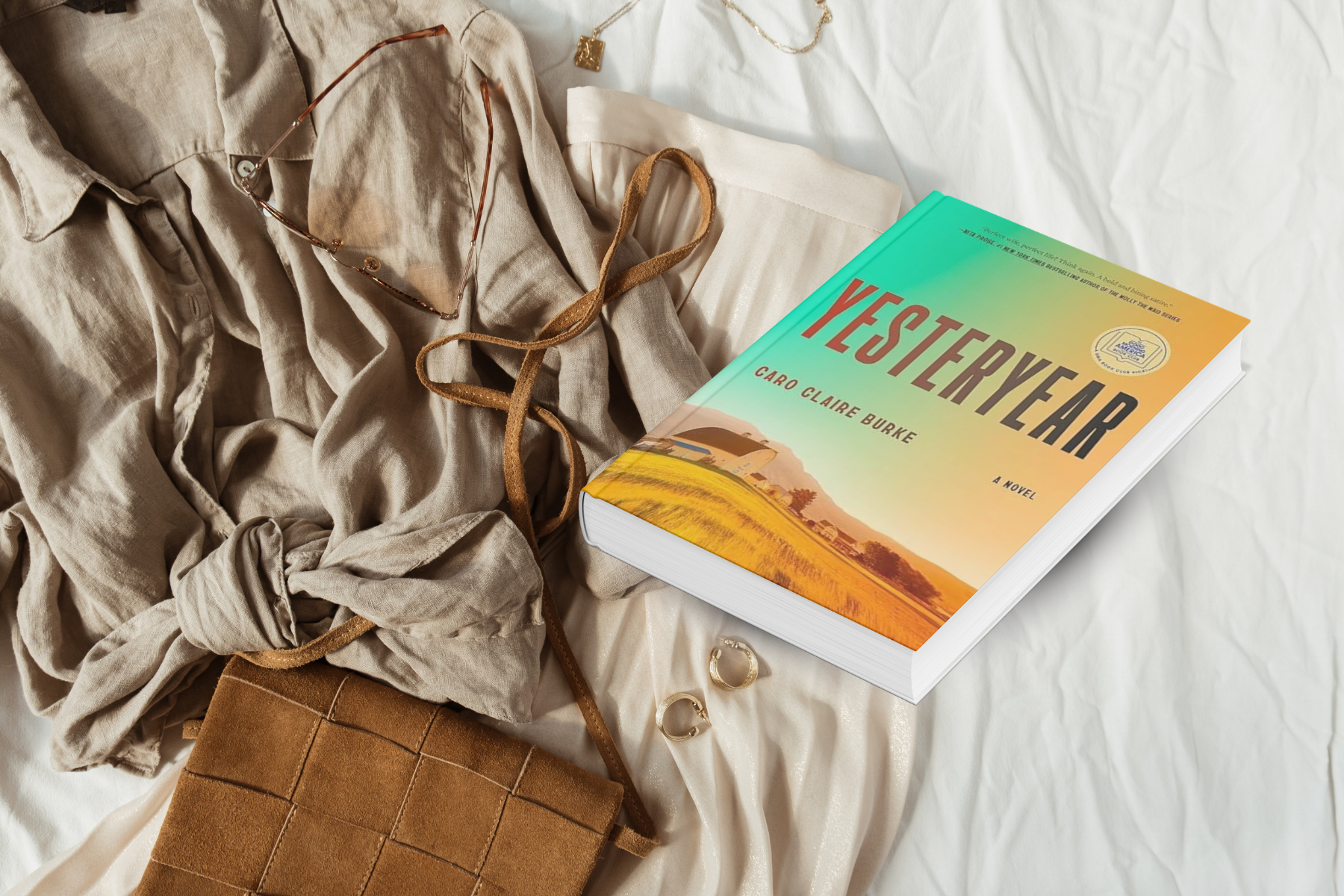
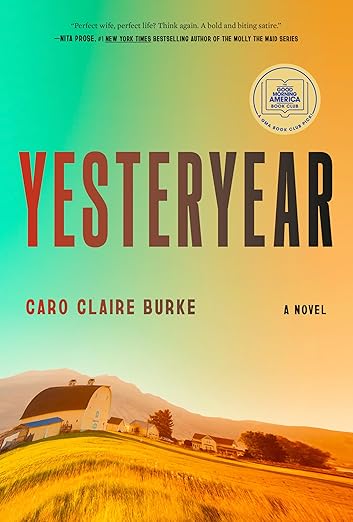
I recently finished Yesteryear, the No. 1 New York Times bestseller, Good Morning America Book Club pick, and current BookTok obsession.
And I have to say something that may get me yelled at online:
This book is weird. It is also kind of boring.
Let’s discuss.
What Is Yesteryear About?
Yesteryear follows Natalie, a tradwife influencer who has built a massive online audience around her perfectly aesthetic, God-honoring domestic fantasy.
She bakes sourdough. She submits to her husband. She makes traditional womanhood look soft, beautiful, and sponsored by natural lighting.
You will probably hate her immediately. I did.
That changed slightly when she started calling other women cunts, apologizing to God for it, and then essentially doubling down on the name-calling. Those parts were pretty funny.
Then Natalie wakes up in 1855. There is no electricity, no running water, and, most devastatingly for her, no Instagram.
There is only brutal manual labor and the actual reality of the premodern lifestyle she had been pretending to live for her followers.
On paper, this premise is fantastic.
The book explores performative faith, femininity, influencer culture, authenticity, and the difference between faking a lifestyle for cameras and actually living it.
And to be fair, parts of it really work.
The Satire in Yesteryear Can Be Hilarious
Some of my favorite moments happen when Natalie has a judgmental or selfish thought, immediately apologizes to God inside her head, and then reminds us she really meant it.
Those scenes made me laugh out loud.
They also expose how much of Natalie’s online identity is a performance.
She knows exactly what to say, how to behave, and which version of herself will receive the most praise.
We have all seen people do this online. (You are not fooling anyone.)
The call is coming from inside the perfectly decorated farmhouse.
The Story Started to Drift
The novel jumps between Natalie’s present-day influencer life, her past, and the time she spends trapped in 1855.
Instead of building tension, those timelines began to feel like they were floating alongside one another.
The 1855 sections became repetitive. I understood the point fairly early, but the book kept making it.
Yes, Natalie romanticized a life that was actually difficult, dangerous, and exhausting.
Yes, her online persona was largely a spectacle.
Yes, living without indoor plumbing is less charming when you are the one carrying the water.
I got it.
And then we kept going.
We Also Need to Discuss Natalie’s Husband
Actually, no. Let’s not.
He is clearly supposed to represent the idealized traditional husband Natalie promotes online.
Unfortunately, he also completely sucks. You will not like him either.

By a certain point, I could no longer decide which one of them was more unhinged, Natalie or her husband.
Everybody needed therapy, Wi-Fi, and perhaps a group chat with some brutally honest friends.
The Author’s TikTok History Makes the Book More Interesting
While I was posting about Yesteryear on Instagram, someone told me the author previously made TikTok videos about tradwife influencers.
Naturally, I immediately went looking.
Apparently, many of those videos have since been deleted. Only three videos were still available when I checked, and I would have loved to see the older ones.
That context makes the book even more interesting because its satire feels connected to a much larger cultural conversation.
Tradwife aesthetics, curated faith, online femininity, and influencer authenticity are all hot-button topics right now.
That timing is almost certainly part of why Yesteryear has become such an obsession.
I have even seen Christian creators complain about how the book portrays Christianity.
And I am sitting there thinking: Girl, you are so close to getting it.
I Was Bored, but I Still Had a Book Hangover
Here is the confusing part.
I was not especially entertained while listening to this book.
By the end, I barely cared about the time travel or its explanation. But I could not stop thinking about it afterward. That counts for something.
The concept is strong. The cultural commentary is timely. The satire has genuine flashes of brilliance.
It gave me plenty to think about, even when the actual reading experience dragged.
The audiobook narrator was also fabulous, which helped.
So, was it bad? No.
Did I love it? Also no.
The concept did a lot of the heavy lifting.
My Yesteryear Rating
The concept: 5 out of 5 stars
The execution: 3 out of 5 stars
My overall rating: 3 out of 5 stars
Yesteryear is clever, timely, uncomfortable, and occasionally hilarious.
It is also repetitive, slow in places, and more interesting to think about than it was to actually experience.
Did you love it? Hate it? Spend the entire book wondering how Natalie would survive without a ring light?
And if you were deeply offended by the religious commentary while having a Bible verse in your bio, you may want to move along.
Or perhaps this book is exactly what you need to read.
Want more book recommendations? Click here.